Wedding Bouquet Trends Through the Decades
How Bridal Florals Have Evolved Over Time
Wedding bouquets have changed dramatically over the past century, reflecting shifts in fashion, culture, and personal expression.
Let’s take a look at how bouquet styles have evolved.
1920s: Cascading Elegance
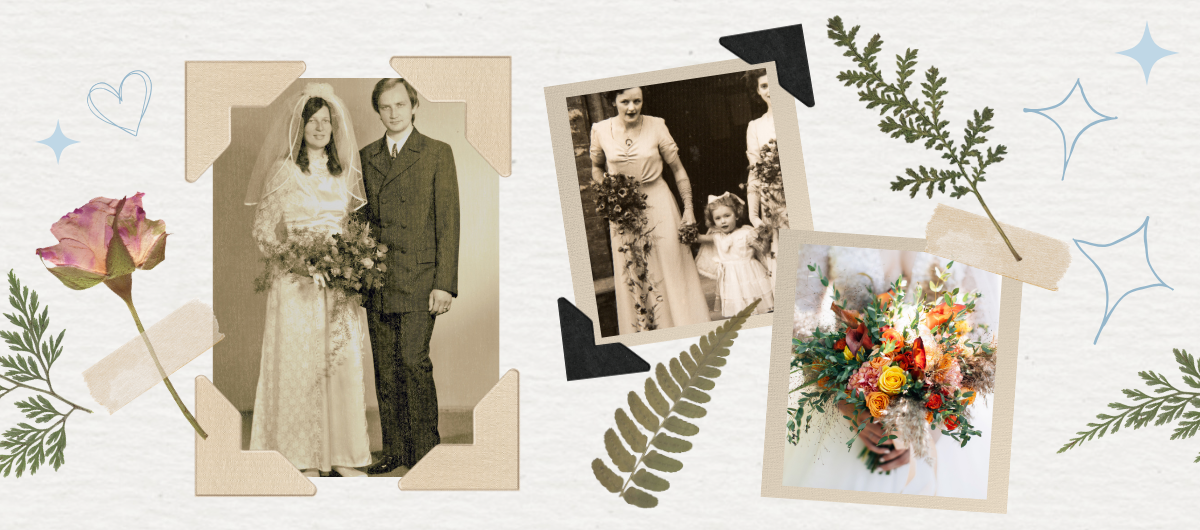
Bouquets in the 1920s were:
Long and flowing
Structured yet romantic
Often featuring trailing greenery
They complemented the glamour and formality of the era.
1950s: Classic Rose Bouquets
Post-war weddings embraced tradition and simplicity.
Bouquets were:
Round and tightly arranged
Often made with roses
Clean, polished, and symmetrical
1980s: Bold & Dramatic
The 80s brought volume and drama.
Bouquets featured:
Large greenery
Bright colours
Statement shapes
More was definitely more.
2000s: Minimal & Structured
Early 2000s bouquets leaned toward:
Clean lines
Minimal greenery
Controlled arrangements
A shift toward modern simplicity.
Today: Organic & Garden-Inspired
Flower preservation is a natural process, and every bloom reacts differently. Some common changes include:
• Browning or yellowing, especially in white flowers
• Petals becoming translucent
• Loss of structure or shape
• Uneven colour changes or bleaching
• Darkening of certain colours as flowers dry
These changes are completely normal and part of preserving a living thing. No two flowers — or bouquets — will preserve exactly the same way.

From Trend to Timeless Keepsake
No matter the decade, one thing remains the same:
Wedding flowers are deeply personal.
Preserving your bouquet allows you to hold onto not just a trend — but a moment that reflects your unique story.
Preserve Your Bouquet - No Matter the Style
Whether your bouquet is modern and organic or classic and timeless, it deserves to be remembered long after the day is over.
Flower preservation allows you to turn your bouquet into artwork that reflects your style and your story.
If you’re planning your wedding (or just had one!), now is the time to secure your preservation.